
info@timran.et | +251 116 73 48 48
Ethiopian women delegates concluded a Peer Exchange on Transitional Justice in Rwanda
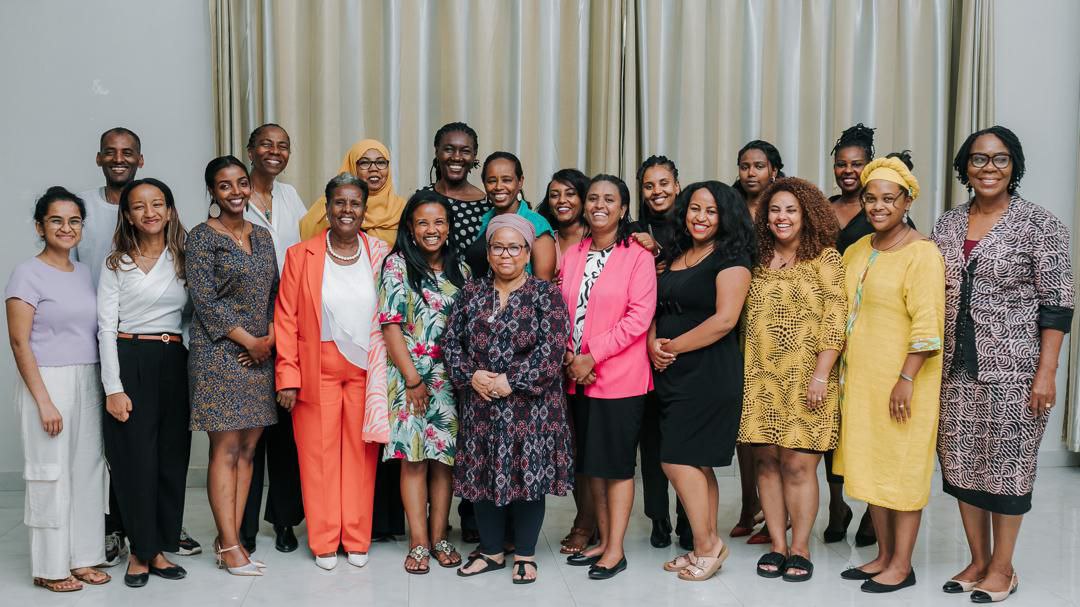
Ethiopian women delegates comprised from TIMRAN and the Coalition for Women’s Voice in the National Dialogue concluded a Peer Exchange on Transitional Justice from June 10-14, 2024, G.C. at Kigali, Rwanda.
In addition women from South Africa, Liberia and Rwanda were participated in the Peer Exchange event. Each country political, security, economic and social manifestations in relation to women participation assessed in groups and presented to the participants.
Though women comprised the largest numbers in each nation they have less representation and participation in all aspects of societal life with some exceptions and manifestations in each country.
Nevertheless, women had invaluable contribution in implementing a National Dialogue (ND) and Transitional Justice (TJ) in all of the three nations.
South Africa had experienced Apartheid till 1994; Rwanda faced Genocide in 1994; whereas Liberia passed through multiple civil wars years back. More or less, all of the three nations transitioned to democratization and created an inclusive society having reliable success stories with their own limitations.
As a nation South Africa promote unity in diversity through UBUNTU (solidarity), freedom of speech, having vibrant CSOs and by creating practical political space. Its Truth and Reconciliation Commission (TRC) that was established to investigate the human rights abuses committed from 1960 to 1994 nearly 30 years ago could make the nation transition real from dark to light. Within the transition process women had great role mainly majority of the testimonies were women across the nation.
Rwanda is a unified nation after the Genocide that happened in 1994. The role of women in all of the transition process was immense. Besides other tribunals established by the International Criminal Court (ICC) to arbitrate the Genocide leaders; the country implement the Gacaca court system which is dominated by women to reconcile cases between the survivor (family) and the suspect (killer) in the same place and finding the truth, forgiving past deeds and embracing the future. This practice mends the society wound and maintain their unity for the last three decades. At this day, women have majority representation and participation in politics. The state become more women inclusive that prioritize stability, security and wellbeing of the nation.
Liberia passed through multiple civil wars due to power struggle between different factions but able to transit to a democratic society. Although its society is patriarchal and the social norm is high women took a leading role for the nation peace building action and they still are the forerunners in the Peace Hats Movement. Nowadays, women have 25% representation in government in addition to increased number of women in the security apparatus. Largely women participate in the informal economic sector of the country.
TJ is a strategy to address human rights violations in post conflict authoritarian setting. Ethiopia having multiple identities manifested by ethnic fragmentation, political violence, low women representation and other challenges; it could learn much from South Africa, Rwanda and Liberia.
All in all, women participation in any TJ process is crucial to maintain peace. Women wanted truth telling, reparations, memorialization, reconciliation, institutional reform, prosecution and amnesty in the process.
Fourteen Ethiopian delegates along with two South African, two Liberian and one from Rwanda including moderators from INCLUSIVE PEACE, the event organizer, attended the peer exchange for four days at Kigali.